Business Name: BeeHive Homes of Kanab
Address: 1364 S Powell Dr, Kanab, UT 84741
Phone: (435) 767-9033
BeeHive Homes of Kanab
Located adjacent to the beautiful community park in the Kanab Creek Ranchos area, this popular facility serves the residents of Kanab and Kane County. There’s usually a sing-a-long and banjo band practicing on Sunday afternoons and typically a few residents sitting on the big front porch. Pet therapy visits from neighboring “Best Friends” Animal Sanctuary is also a favorite activity.
1364 S Powell Dr, Kanab, UT 84741
Business Hours
Monday thru Sunday: 9:00am to 5:00pm
TikTok: https://www.tiktok.com/@beehivehomesofkanab
Facebook: https://www.facebook.com/beehivekanab
Instagram: https://www.instagram.com/beehivekanab/
Choosing an assisted living house is among those choices that reshapes daily life for an older grownup and for individuals who like them. Families typically reach this point after a progressive buildup of concern: missed medications, falls, overdue expenses, or simply the sense that a parent is tired of handling a home that has actually ended up being more problem than home. By the time you start visiting neighborhoods, the pressure to get it right can feel intense.
I have actually sat at kitchen tables with families who was sorry for hurrying into a choice, and with others who quietly said, six months later on, "I want we had done this faster." The difference was seldom about chandeliers or fancy menus. It came down to whether they asked the right questions, listened to the responses, and took notice of what was not being said.
The objective is not to discover a best place. It is to find a realistic, safe, and gentle fit that matches your loved one's needs, character, and finances. The questions listed below are framed to help you get there, and to discover what pamphlets and sales tours rarely reveal.
Start with clarity about requirements and goals
Before you ask a house anything, you require to ask yourself (and your loved one) a couple of hard questions. Without clearness on requirements and goals, even the very best assisted tour becomes a sales pitch rather of a careful evaluation.
Spend time on 3 standard concerns:
First, what is taking place today that is no longer operating at home? Specify. Is it medication management, nighttime wandering, duplicated falls, social seclusion, caretaker burnout, or something else? A vague response like "they are just getting older" will not assist you determine the level of care needed.
Second, what do you hope assisted living will improve, for both the older adult and the household? This might consist of less emergency room visits, more consistent meals, relief from 24/7 caregiving, or more social contact.
Third, what matters most mentally to your loved one? Some individuals care deeply about privacy and control of their schedule. Others care more about friendship, cultural fit, religious life, or staying close to a specific neighborhood.
Write this down in plain language. You will utilize these notes as a lens for the rest of the process.
Understanding the level of care: what can they actually do?
Assisted living sits in the middle of the senior care spectrum. It provides more aid than independent living, however usually less intensive treatment than a knowledgeable nursing facility. The problem is that the term "assisted living" covers a large range of capabilities. One house might conveniently support an individual with moderate dementia and complex medication needs. Another might quietly expect residents to leave as soon as they need aid with toileting.
When you visit, do not simply ask, "What services do you use?" Ask detailed, scenario-based questions.
How do you evaluate care requirements before move-in? A serious neighborhood will perform a nursing assessment and develop a composed care strategy. Ask who performs this evaluation, the length of time it takes, and whether the family is involved.
What help can you provide with activities of daily living? These consist of bathing, dressing, grooming, toileting, transferring, and consuming. Inquire about each one, not simply "personal care." If your mother declines showers, ask how caretakers deal with that. If your father has problem with buttons and zippers, ask whether personnel can assist him choose clothes and dress.
Who handles medications, and how? Mismanaged medication is one of the most typical reasons for hospitalization in older adults. You want to know whether a certified nurse is included, how medications are kept, who provides, and what occurs if a dosage is missed out on or declined. Ask if they can manage complex routines, such as insulin, warfarin, or several eye drops.
What is your technique to cognitive decrease and dementia? Even if your loved one is still sharp, the truth is that cognition can change. Ask how the residence manages roaming, sundowning, resistance to care, or fear. Do they have a dedicated memory care system, or do they "age in place" within routine assisted living?
Clarify where their line is. At what point would you advise a greater level of care or a move to experienced nursing? Listen for sensible, detailed answers, not vague reassurance.
Staffing, training, and management: who is really doing the work?
Brochures speak about "caring staff." The real concern is how many people are working at 2 a.m. On a Sunday, what training they have, and how steady the management is.
Ask about staffing ratios, however contextualize them. Ratios differ by state, and there is no ideal number that fits every population, but you can still glean a lot from the action. Ask for common ratios during days, evenings, and nights. Then ask, "What happens when somebody hires sick?" If the answer is that they rely greatly on agency personnel or double shifts, you can anticipate more turnover and less consistency of care.
Training is another separating line between typical and exceptional senior care. Request details on orientation for brand-new caregivers. The number of hours, and what topics? Do they consist of dementia communication, safe transfers, incontinence care, and acknowledging early signs of infection or delirium? Ask about continuous training requirements and how frequently staff receive refreshers.
Leadership stability matters more than many families realize. A strong executive director and constant nursing management create a culture where great caregivers wish to remain. Ask for how long the executive director, resident care director, and activities director have been in their functions. High turnover at the top is often an indication that the structure looks great but has unresolved problems.
You can likewise ask: during off hours, who is in charge? Exists a nurse on site or on call? Who decides to send someone to the emergency room if needed?
Safety, medical oversight, and emergencies
Elderly care is never ever risk totally free, whether in your home or in a house. The objective is to reduce avoidable harm, respond rapidly when something occurs, and avoid unnecessary emergency clinic trips that can be confusing and dangerous for older adults.
Start with fall prevention. Ask how they assess fall risk at move-in and after occurrences. What ecological procedures remain in location, such as grab bars, non-slip floor covering, adequate lighting, and clear hallways? How do they balance safety with autonomy, for instance with homeowners who refuse to use walkers?
Clarify medical oversight. Assisted living is not a hospital, but residents still need timely access to clinicians. Ask whether there is an on-site nurse, and during what hours. Exists a routine going to primary care supplier, geriatrician, or nurse specialist? Can locals keep their own medical professionals, and if so, how do laboratory work, mobile x-rays, or specialized visits get coordinated?
Emergencies are where procedures either safeguard locals or expose gaps. Ask what occurs in a medical emergency situation, throughout the day and in the middle of the night. Who reacts first? Do personnel have CPR training? How long does it usually consider emergency situation services to get here because neighborhood?
Do not forget catastrophes and failures. Ask about backup power, evacuation strategies, and how they communicated with households throughout previous storms, wildfires, pandemics, or other interruptions. Communities that have endured genuine crises often have fine-tuned, useful protocols.
Daily life: routines, flexibility, and dignity
The best assisted living homes feel more like a small, well-supported area than a hotel. The difference lies in how they deal with day-to-day regimens, individual preferences, and the inevitable peculiarities that include aging.
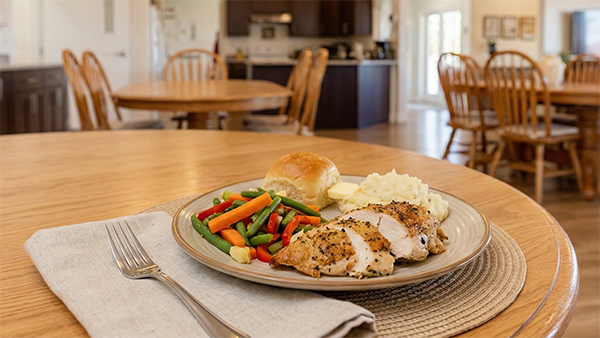
Meals are an excellent window into the culture. Ask how meal services work: repaired seating or open dining hours, designated tables or flexible social blending, capability to buy options. If your loved one is a late riser, ask whether breakfast is still readily available at 10 a.m. If someone is vegetarian or has diabetes, probe how menus are adjusted in practice, not just in theory.
Look at bathing and grooming schedules. Are showers just on specific days, or can they adjust based on choice? How do they regard modesty and privacy? Older grownups often feel exposed and vulnerable throughout these tasks. The way staff talk about it will tell you a lot about dignity and patience.

Ask about choices. Can citizens embellish their houses as they like? Are they enabled small devices such as microwaves or coffee makers? Can they control their own thermostat and lighting? These details can substantially affect comfort.
Noise level, smells, and general environment matter more than refined marketing. Take note as you walk around. Is the tv blaring in typical areas all day? Are homeowners engaged in activities, sitting silently with books, talking, or parked in wheelchairs around a nursing station? There is no single perfect scene, but you want to see range and indications that people are not merely being "saved."
Activities and social life: beyond bingo
Social connection is not a bonus. It is part of health. Seclusion gets worse depression, speeds up cognitive decrease, and reduces overall quality of life. Yet lots of activity calendars look remarkable on paper and hollow in practice.
Ask to see the present month's calendar, then pick a random day and ask what really took place. Ask the number of locals generally participate in activities, and whether they track private engagement. Great programs adjust to those who do not naturally join groups, possibly through small visits, music, or one-to-one hobbies.
If your loved one delights in particular interests, such as gardening, religious services, lectures, or art, ask how those can be supported. For citizens with minimal vision, hearing loss, or mobility problems, ask how the activities are adapted, not simply whether they are welcome.
Transportation is another useful issue. Does the home deal scheduled trips to grocery stores, medical visits, religious services, or community events? If so, how frequently and at what expense? Access to the bigger neighborhood assists numerous residents feel less "put away" and more connected.
beehivehomes.com elderly careFinancial truth: costs, contracts, and what occurs if needs change
Families often find expenses more difficult to go over than care requirements, however clarity about cash prevents later heartbreak. Assisted living rates models can be surprisingly complex.
Ask for a detailed list of charges. Generally, there is a base rate for real estate, meals, and basic services, plus extra tiers or points for care. These may be identified "Level 1 to Level 5" or calculated through a scoring system based upon the resident's needs. Demand examples. For instance, what would a resident pay who requires help with bathing two times a week, medication reminders three times daily, and help with toileting and transfers?
Then ask the most important financial concern: how frequently do you reassess costs, and what triggers a boost? Some communities adjust rates each year, others after any modification in the care strategy. You would like to know whether an extra 5 minutes of assistance every day might push someone into a higher-cost tier.
Clarify what is not included. Common additionals consist of incontinence products, individual laundry, cable tv, internet, transport, visitor meals, and particular activities. Ask particularly about each of these, due to the fact that "complete" bundles often conceal limits.
Long-term monetary sustainability requires a truthful appearance. If your loved one's savings run low in five to seven years, what takes place? Some neighborhoods accept Medicaid waivers, however typically just for a subset of apartments and after personal spend for a duration. Others are purely personal pay and will need a move when funds are exhausted. Do decline vague assurances. Request for composed policies and real-world examples of what has actually happened to homeowners who outlived their resources.
Respite care: a low-risk trial run
Respite care is typically overlooked, yet it can be one of the most useful tools for families who are unsure whether assisted living is the best move. Numerous houses offer short-term stays, varying from a week to a couple of months, which can serve numerous purposes.
For household caregivers on the edge of burnout, respite provides rest and an opportunity to manage their own medical consultations or life jobs. For an older grownup, a brief stay can act as a low-risk trial. They experience the regimens, fulfill personnel, and get a sense of the neighborhood, without fully giving up their home.
Ask whether the residence uses respite care, what the minimum and maximum stays are, and the day-to-day or month-to-month cost compared to standard rates. Clarify whether respite residents receive the very same level of access to activities, dining choices, and care services as long-lasting residents.
A useful concern is: the number of respite stays ultimately become long-term moves each year? Not because you wish to become part of a quota, but because it exposes whether the house is confident enough in its everyday experience that people pick to stay after attempting it.
Family interaction and involvement
When older grownups move into assisted living, households do not stop caring, they simply shift functions. How the home partners with families has a direct result on both satisfaction and safety.
Ask about interaction regimens. How typically does the nurse or care supervisor provide updates, and by what method? Exist regular care conferences where families can evaluate the care strategy and ask questions? How easily can you reach somebody who understands your loved one's situation if you get in touch with a weekend?
Policies about going to matter too. Are there set visiting hours, or can household come over when they like? Exist private spaces to visit outside the resident's apartment or condo? For households who live far, ask whether video calls can be facilitated if the resident lacks the technical skills.
Do not avoid asking how the home handles disputes. For example, what if a resident declines care that the family believes is required, or the family demands limitations that the resident resents? Search for answers that lionize for resident rights, while still taking family issues seriously.
Practical concerns during a tour: what to see for
Tours can be carefully choreographed, however you can still collect a lot by being watchful and asking direct concerns on the spot. One brief, focused list can assist keep your visit grounded.
During a tour, consider paying unique attention to the following:
- How personnel interact with residents in passing, especially when they do not know you are listening Whether locals appear groomed, properly dressed for the time of day, and took part in something meaningful Cleanliness in less obvious places, such as corners, baseboards, and shared restrooms Odors that suggest chronic incontinence concerns or bad house cleaning, especially in corridors rather than a single room How staff react when a resident calls out or tries to get attention while you are there
After the tour, do a second pass in your mind: did you feel hurried or truly invited to ask questions? Did the staff talk just about amenities, or did they talk about real-life obstacles with honesty?
Red flags and deal breakers
No home is best, but some warning signs are worthy of severe weight. These typically emerge when you press carefully below the surface.
Pay very close attention if you hear inconsistent answers from various staff about essential concerns such as staffing levels, medication management, or emergency situation responses. Irregular stories generally mean inconsistent practice.
Another warning is chronic understaffing. You can notice this when buzzers sound for long stretches, staff walk quickly with tense expressions, or there are frequent apologies for "being brief today" across multiple visits. A rough day is regular. A constant sense of scramble is not.
Watch for a culture that deals with citizens as jobs rather than people. A basic example: do personnel understand homeowners' names, or do they state "honey" and "sweetie" to everyone because they can not remember who is who? When a resident is puzzled or moving gradually, do staff show persistence, or do they rush, scold, or ignore?
Financial pressure methods are another problem. If you feel pushed to sign rapidly "before rates go up," or sense reluctance to let you check out the agreement thoroughly, decrease. A respectable community will anticipate and invite careful review.
Finally, take notice of your loved one's reactions. They might not state it straight, however you will see discomfort, anxiety, or emerging interest in their body language. A neutral action on day one can warm over a few visits, however an intense unfavorable response is worthy of respect, even if it complicates logistics.
For lots of households, it helps to carry a succinct reminder of the most severe red flags to expect, so they do not get lost in the flood of information.
Some of the most essential warnings to deal with as prospective offer breakers consist of:
- Repeated management turnover within a short time frame Vague or incredibly elusive answers about how they handle falls, infections, or behavioral problems Poor personnel morale that you can see and feel, such as open grumbling in halls Unclear financial terms, regular "exceptions," or resistance to providing composed policies A contract that gives the home broad power to release residents with little notice
If you come across 2 or more of these in the same place, time out, even if the place or décor feels ideal.
Balancing head and heart
Assisted living, at its finest, uses safety, relief, and brought back self-respect for older adults who are tired of having a hard time alone at home. It can also provide household caretakers the area to end up being boys, daughters, or partners again, instead of exhausted full-time aides.
The questions you ask shape whether you see only the refined surface areas or glimpse the genuine everyday life of the home. Move beyond shiny descriptions and into specifics: who will assist your parent out of bed at 6 a.m., who will observe the subtle change in cravings that means an infection, who will sit and listen when sorrow or confusion surfaces late at night.
Senior care decisions are rarely clean or simple. They include trade-offs among independence, security, expense, and family characteristics. Yet when you approach assisted living with clear requirements, sincere concerns, and mindful observation, you greatly improve the odds of finding a place where your loved one is not simply housed, but genuinely cared for.
BeeHive Homes of Kanab provides assisted living care
BeeHive Homes of Kanab provides memory care services
BeeHive Homes of Kanab provides respite care services
BeeHive Homes of Kanab supports assistance with bathing and grooming
BeeHive Homes of Kanab offers private bedrooms with private bathrooms
BeeHive Homes of Kanab provides medication monitoring and documentation
BeeHive Homes of Kanab serves dietitian-approved meals
BeeHive Homes of Kanab provides housekeeping services
BeeHive Homes of Kanab provides laundry services
BeeHive Homes of Kanab offers community dining and social engagement activities
BeeHive Homes of Kanab features life enrichment activities
BeeHive Homes of Kanab supports personal care assistance during meals and daily routines
BeeHive Homes of Kanab promotes frequent physical and mental exercise opportunities
BeeHive Homes of Kanab provides a home-like residential environment
BeeHive Homes of Kanab creates customized care plans as residents’ needs change
BeeHive Homes of Kanab assesses individual resident care needs
BeeHive Homes of Kanab accepts private pay and long-term care insurance
BeeHive Homes of Kanab assists qualified veterans with Aid and Attendance benefits
BeeHive Homes of Kanab encourages meaningful resident-to-staff relationships
BeeHive Homes of Kanab delivers compassionate, attentive senior care focused on dignity and comfort
BeeHive Homes of Kanab has a phone number of (435) 767-9033
BeeHive Homes of Kanab has an address of 1364 S Powell Dr, Kanab, UT 84741
BeeHive Homes of Kanab has a website https://beehivehomes.com/locations/kanab/
BeeHive Homes of Kanab has Google Maps listing https://maps.app.goo.gl/DgdPVQuKPzt13nDB8
BeeHive Homes of Kanab has TikTok page https://www.tiktok.com/@beehivehomesofkanab
BeeHive Homes of Kanab has Facebook page https://www.facebook.com/beehivekanab
BeeHive Homes of Kanab has Instagram page https://www.instagram.com/beehivekanab/
BeeHive Homes of Kanab won Top Assisted Living Homes 2025
BeeHive Homes of Kanab earned Best Customer Service Award 2024
BeeHive Homes of Kanab placed 1st for Senior Living Communities 2025
People Also Ask about BeeHive Homes of Kanab
How much does assisted living cost at BeeHive Homes of Kanab, and what is included?
Monthly rates range from $4,500 to $5,300, depending on room size and features. Our pricing is all-inclusive, covering home-cooked meals, snacks, utilities, DirecTV, medication management, biannual nursing assessments, and daily personal care. Families are only responsible for pharmacy costs, incontinence supplies, personal snacks or sodas, and transportation to doctor appointments if needed
Can residents stay in BeeHive Homes of Kanab until the end of their life?
Yes. Many of our residents remain at BeeHive Homes of Kanab through the end of life with the support of local home health and hospice agencies. While we are not a skilled nursing facility, our caregivers work closely with hospice providers to ensure comfort, dignity, and compassionate care. Our goal is for residents to remain in the familiar surroundings of our Kanab home, surrounded by staff and friends who have become family, for as long as possible
Do we have a nurse on staff?
While BeeHive Homes of Kanab does not have a full-time nurse on site, each home has access to a consulting nurse who is available 24/7. If additional medical support is ever needed, a physician can order home health or hospice services to come directly into our home. This partnership allows us to provide personalized care while ensuring residents always have access to the medical attention they may require
Do you accept Medicaid or state-funded programs?
Yes, we participate in Utah’s New Choices Waiver Program and also accept the Aging Waiver for respite care. Both programs require prior authorization, and we are happy to help guide families through the process
Do we have couple’s rooms available?
Yes, couples are welcome in our larger rooms, including suites with private full baths. This allows spouses to continue living together while receiving the care and support they need
Where is BeeHive Homes of Kanab located?
BeeHive Homes of Kanab is conveniently located at 1364 S Powell Dr, Kanab, UT 84741. You can easily find directions on Google Maps or call at (435) 767-9033 Monday through Sunday 9:00am to 5:00pm
How can I contact BeeHive Homes of Kanab?
You can contact BeeHive Homes of Kanab by phone at: (435) 767-9033, visit their website at https://beehivehomes.com/locations/kanab/ or connect on social media via TikTok Facebook or Instagram
You might take a short drive to the Little Hollywood Land: Museum, Trading Post & Chuckwagon Cookout. The Little Hollywood Museum showcases Western film history that creates an engaging outing for assisted living, memory care, senior care, elderly care, and respite care residents.